
The Unpatriotic Truth

 History is our weapon. It shows us the blueprints of oppression and the playbook of those who fought back. It reminds us that injustice isn’t new, but neither is courage. It proves that ordinary people, when informed and organized, can do extraordinary things.

A.M. Ber
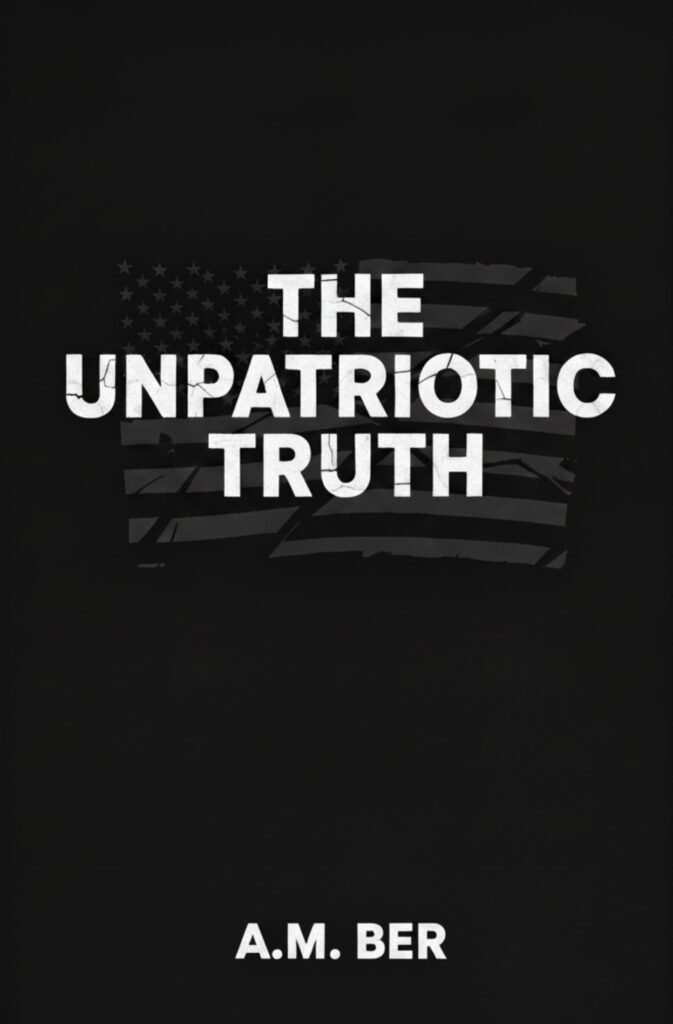
The Unpatriotic Truth by A.M. Ber

Buy Now

Introduction

History isn’t just something that happened. It’s something we live in. It shapes our laws, our rights, our fears, our freedoms, and our future. But let’s be honest, most Americans didn’t get the full story. We got a sanitized version, a patriotic myth, and a confusing blur of dates and dead men. We learned about the Constitution without fully understanding who it protected. We heard about freedom while skipping over who was denied it. We celebrated progress without reckoning with the cost. That’s not entirely our fault. A lot of the most important history, the kind that helps us make sense of what’s happening right now, has been buried, distorted, or erased. Not because it’s boring, but because it’s dangerous. Because if more Americans really understood how power works, how injustice persists, and how citizens can change things, the people at the top might start to lose their grip.

This book is for anyone who wants to understand the United States better; not just where we are, but how we got here. Understand why our politics feel broken, why our rights are on the line, why the same fights keep happening over and over again, and what we’re actually up against. It’s not a textbook. It’s a wake up call.

The truth is, the past doesn’t just live in museums or textbooks. It lives in voting booths, courtroom decisions, paychecks, prisons, police budgets, protests, school boards, and even your social media feed. Every major issue we face today, from abortion rights to book bans, from corporate greed to climate collapse, is connected to a long, traceable history. Walk into any American city and you’ll see history made physical: redlined neighborhoods that still show the effects of segregation, monuments to Confederate generals who fought to preserve slavery, schools named after politicians who championed exclusion, highways that carved up Black and Latino communities, banks that still carry the names of institutions built on enslaved labor.

  • The housing crisis? It’s connected to decades of discriminatory lending practices and zoning laws designed to keep communities segregated by race and class.
  • The climate crisis? It’s connected to an energy system built by corporations that knew their products were dangerous but chose profits over the planet.
  • Mass incarceration? It’s the direct descendant of Black Codes, convict leasing, and a drug war designed to criminalize political dissent.
  • Voter suppression? It’s the modern evolution of literacy tests, poll taxes, and violent intimidation that kept Black Americans from the ballot box for a century after the Civil War. 

This isn’t ancient history. This is the foundation of the house we’re all living in. The people in power know this history intimately. That’s why there’s a growing effort to erase or rewrite it; to ban books, to restrict what teachers can say, to paint truth tellers as “un-American.” Because historical ignorance isn’t just unfortunate, it’s useful. It’s strategic. It keeps people divided, distracted, and disoriented. It keeps us from seeing the bigger picture.

When politicians talk about “making America great again,” they’re counting on you not knowing what America was actually like in the past, or for whom it was great. When they invoke the “Founding Fathers,” they’re hoping you won’t ask too many questions about what those men believed, who they excluded, or how they accumulated their wealth and power. When they say protesters should be “more respectful” or “less divisive,” they’re hoping you’ve forgotten that every major advance in American freedom came through disruption, resistance, and people refusing to wait for permission to demand justice. The powerful understand that historical ignorance is a form of political control. If you don’t know how you got into a burning house, you’re less likely to know how to get out. But history is also a weapon, our weapon. It shows us the blueprints of oppression and the playbook of those who fought back. It reminds us that injustice isn’t new, but neither is courage. It proves that ordinary people, when informed and organized, can do extraordinary things.

Every right you enjoy today was won by people who were told they were asking for too much, moving too fast, or threatening the stability of society. The eight hour workday, the right to vote, the ability to attend integrated schools (or even attend school at all), the freedom to marry who you love, and every right enjoyed by every person that is not a rich white male; none of these were gifts from benevolent leaders. They were victories won by movements of people who understood that power never gives up power voluntarily. History shows us that the arc of justice doesn’t bend toward freedom automatically. It bends because people grab it and pull. And the more people know about how this bending has happened before, the better equipped they are to keep pulling.

You don’t need a PhD to understand the forces shaping your life. You just need a clear map. That’s what this book aims to be. This book won’t tell you everything that’s ever happened in American history. It’s not a comprehensive timeline. It’s not exhaustive. And it’s definitely not neutral. It’s focused. It’s urgent. And it’s political; not in the sense of partisan left versus right, but in the sense that everything from your paycheck to your privacy is affected by political power. This book is about how that power was built, how it was challenged, and how it continues to shape the world around you. Each chapter is designed to give you essential context for understanding current events through the lens of historical patterns. You’ll see how decisions made decades or centuries ago are still driving inequality, conflict, and resistance today. You’ll learn about the people, often erased from mainstream textbooks, who fought to expand democracy and hold America accountable to its highest ideals.

You don’t need to read this book in order, though there’s a logic to the sequence. You can jump around, focus on the chapters that feel most relevant to your life right now, or read it straight through. But as you move through it, a pattern will emerge,  one that exposes how today’s crises are not accidents or isolated incidents. They’re the result of long, deliberate choices made by people with power to protect their power.

This book will make some people uncomfortable. It challenges myths that many Americans were raised to believe. It asks hard questions about institutions we’ve been taught to revere. It connects dots that some people would prefer to leave unconnected. If you’re looking for a book that celebrates American exceptionalism without examining American contradictions, this isn’t it. If you want history that makes you feel good about the past without thinking critically about the present, you’ll want to look elsewhere. But if you want to understand why our democracy feels fragile, why inequality keeps growing, why the same fights keep erupting, and what you can actually do about it, keep reading.

The stakes have never been higher. Authoritarianism is on the rise,  not just in distant countries, but here at home. Democratic norms are being shredded. Rights that took generations to win are being rolled back in real time. Facts are being weaponized. Billionaires are writing policy while working families struggle to survive. Extremists are running for office, and winning. Climate change is accelerating while meaningful action is blocked by fossil fuel money and willful ignorance. And through it all, too many Americans are being told to “just trust the system” when the system has repeatedly failed them, or to “be patient” when patience has been used as a tool to delay justice for generations.

We’re living through a moment when the contradictions built into American society from the beginning are finally becoming impossible to ignore. The gap between our ideals and our reality is widening. The tension between democracy and oligarchy is reaching a breaking point. The question isn’t whether change is coming,  it’s what kind of change we’ll get. If we don’t understand how we got here, we’re not going to get out. But if we do understand; if we study the playbook, recognize the patterns, and learn from both the mistakes and the victories of the past; we can flip the script. This isn’t just about history. It’s about power, truth, and what we do next.

Throughout this book, you’ll encounter a recurring section that asks, “Would You Have Been the Hero… or the Problem?” These aren’t just thought experiments. They’re mirrors. History is full of people who believed they were good, moral, patriotic Americans while participating in or enabling systems of oppression. They didn’t see themselves as villains. They saw themselves as reasonable people protecting order, tradition, and stability. They convinced themselves that the people demanding change were too radical, too impatient, too disruptive.

Most of us like to believe we would have been on the right side of history. We imagine ourselves hiding enslaved people on the Underground Railroad, marching with Dr. King, protecting Jewish neighbors from Nazi persecution, speaking out against injustice wherever we found it. But the uncomfortable truth is that most people, when faced with those situations, weren’t heroes. They were bystanders. They kept their heads down, went along to get along, and convinced themselves that it wasn’t their place to get involved. The hero test isn’t about making you feel guilty. It’s about making you be honest, because the same systems, the same patterns, the same choices are playing out right now. The real question isn’t what you would have done in 1787 or 1963. The question is, what are you doing today?

By the time you finish this book, you’ll understand that you’re not just reading about history, you’re living in it. The choices you make, the stands you take, the silence you keep, the actions you avoid; all of it becomes part of the historical record that future generations will study. They’ll ask the same questions about us that we’re asking about previous generations: How did they let it get so bad? Why didn’t they do more when they had the chance? How could they have been so blind to what was happening right in front of them? The answers to those questions are being written right now, by all of us, including you. I am not asking you to become a professional activist or run for office or change your life overnight. I am asking you to pay attention, to make connections, to ask questions, to speak up when it matters; to understand that democracy isn’t something that happens to you, it’s something you participate in.

Chapter 6 excerpt

…Despite the Civil Rights Act of 1964, Black Americans in the South still faced massive barriers to voting. Literacy tests designed to be impossible. Poll taxes that poor people couldn’t pay. Violent intimidation that made attempting to register to vote an act of courage that could cost you your life. On March 7, 1965, a peaceful protest for voting rights in Selma, Alabama, became a violent and pivotal moment in American history. Approximately 600 marchers, led by Hosea Williams and a young John Lewis, set out from Selma toward Montgomery, the state capital. They were protesting the killing of Jimmie Lee Jackson, a civil rights activist shot by police while trying to protect his mother from being beaten. They were demanding an end to the systemic disenfranchisement that kept Black Americans from exercising their constitutional rights. They knew they might not make it across the Edmund Pettus Bridge. They marched anyway.

As the protesters crossed the bridge, they were met by a formidable blockade of state troopers and local lawmen, many on horseback. When the marchers refused to turn back, the police launched a brutal and unprovoked attack. Tear gas canisters exploded into the crowd. Officers on foot and horseback charged into the defenseless protesters, swinging clubs and bullwhips. The scene that unfolded was pure, unrestrained violence against unarmed men, women, and children.

More than 50 people were hospitalized with serious injuries. Amelia Boynton Robinson was beaten unconscious. John Lewis suffered a skull fracture. The vivid images of their suffering, captured by television crews and photographers, were broadcast across the nation that evening. America was watching “Judgment at Nuremberg,” a TV movie about Nazi war crimes, when the broadcast was interrupted with footage from Selma. The juxtaposition was devastating. Americans saw their own government doing to its citizens what they’d just condemned Nazis for doing to theirs.

The televised brutality of Bloody Sunday shocked the conscience of the nation. President Lyndon B. Johnson, who had been hesitant to push voting rights legislation, was compelled to act. Just days after the attack, he went before a joint session of Congress to propose the Voting Rights Act, echoing the protesters’ own words: “We shall overcome.” The victims of Bloody Sunday, through their suffering, became catalysts for change. Five months later, the Voting Rights Act of 1965 was signed into law, forever changing the political landscape of the South and finally securing the right to vote for millions of African Americans. But here’s what we forget: those marchers knew what was waiting for them on the other side of that bridge. They’d been warned. They’d seen what had happened to other protesters. They crossed anyway. That’s what it took to get voting rights. People willing to have their skulls fractured. People willing to be beaten unconscious on national television. People willing to put their bodies between America and its conscience….

Chapter 10 excerpt

 …Throughout American history, many Christians have used their faith to support the existing power structure rather than challenge it. They weren’t all evil people, they were mostly comfortable people who convinced themselves that God blessed their way of life and that challenges to it were attacks on faith itself. The Christians who owned slaves convinced themselves that slavery was biblical and that opposing it was opposing God’s will. The Christians who opposed civil rights said that integration threatened Christian civilization and traditional values. The Christians who supported Manifest Destiny and genocide against Indigenous peoples were convinced God wanted them to have Indigenous lands and that spreading Christianity justified any violent, immoral acts they deemed necessary.

Today’s Christian nationalists aren’t different, they’re people who have convinced themselves that their political agenda is God’s will and that their cultural dominance is divine blessing rather than historical privilege built on exclusion, oppression, and violence. They’ve convinced themselves that losing political power is persecution, that sharing public space with other religions is discrimination, that extending rights to others is an attack on their freedom. This movement that claims to champion American values increasingly champions the replacement of pluralistic democracy with a Christian state where religious identity determines citizenship status and where the rights of non-Christians exist only at the sufferance of the Christian majority. This isn’t patriotism. It’s theocracy.

Christian Nationalism, especially in its current iteration allied with Trump’s authoritarian movement and armed with detailed plans like Project 2025, represents an existential threat to American democracy. The infrastructure is built. The personnel are positioned. The plans are published. The only question is whether enough Americans, including Christians who understand that their faith calls them to justice rather than dominion, will recognize the threat and resist before Christian Nationalism transforms America into something unrecognizable as a constitutional democracy.

So ask yourself honestly: Are you using your faith to serve power and maintain your privilege, or to challenge injustice and serve those whom society marginalizes?…

Buy Now